
The Litai: A Few Blessings for Accursed Times
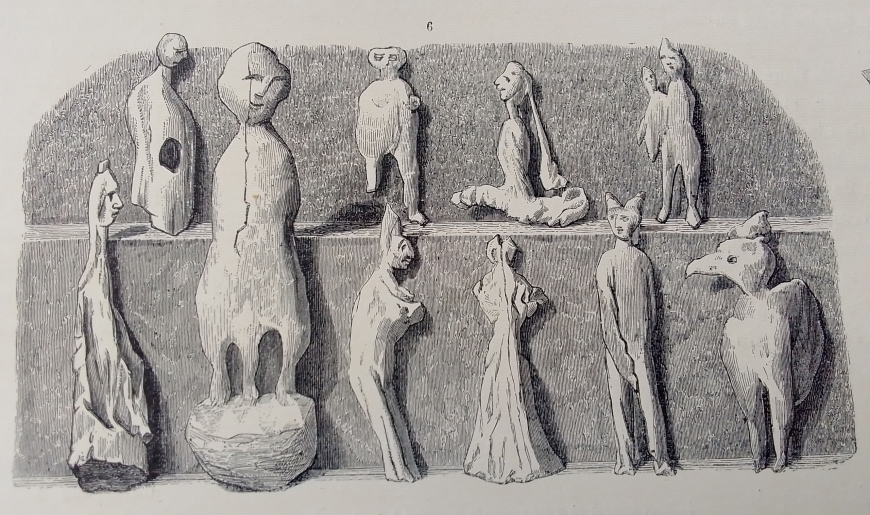
(She enters carrying a Quince)
*
Please god make more things more like Quinces
quietly in accursed times
hanging their heads like icons over the walls
Make more things lean across to us
from gardens
sent by the Queen of scent
Most soap grows less but
Quinces!
these immense and living soaps
slowly increase
Yes god not everything is gold
not everything is made like mouse-fur gloves
most things are more like us
(These words for example – what do they do?
oho they injure the air
they go pleading from ear tô ear
their life’s work is to want more)
but Quinces!
All misshapen and overdue for extinction
please god make more things more supérfluous and quiet as Quinces
Please god bring us more frankinscented characters hard to cut whose sunlit surface continues on the inside
Most things injure each other
but Quinces aré like nothing else
they have this long and suffering look
as if a lemon had swallowed a human
That was a prayer, but what is a prayer? Or should I say who is a Prayer? since this chapter is all about the Litai, whose name in Ancient Greek means Prayers. Who were the Litai and who or what on earth are Prayers?
As far as I know, prayers are the opposite of curses. And a curse is a voice, any old voice, speaking with both ill-will and concentration.
Go to hell!
That is a curse and maybe a man, any old man, shouted that curse at his wife, because she wouldn’t give him some bread. She said listen, it’s almost supper and off he went in a huff shouting
Go to hell!
It was about 2,000 b.c. when this argument happened in the Middle Kingdom in Ancient Egypt. The whole thing was witnessed and written down. There was shouting and slamming of doors, which set the man against his soul and his wife against the stupidness of men and after that the argument couldn’t end. It sat over the world like a cheese dome over a fly.
Go to hell!
Who knows, maybe that curse has come to pass, which is why we are living in these accursed times.
Maybe a voice never vanishes; maybe a phrase has wings like a tiny fly which settles in the lungs and knocks against your mouth when you need to say something and if you say it, the word flies furiously out and enters someone’s ear and lays its eggs in the brain, yes maybe words are alive or maybe
maybe there are listeners everywhere, maybe the earth sends up its grasses as messengers, so that everything you whisper gets filtered down into the mud, it’s like a natural gramophone, the earth is being etched with our voices and after a while there is no curse which hasn’t amplified and multiplied and squared.
And whereas the house of the fox is a den and the house of the virus is a body and the house of the Quince is a tree and the house of the tree is the rain and the house of the rain is a bucket, yet humans dwell inside the multiplied squares of curses.
At least that is more or less where we used to dwell, before books were invented, in the days when language was alive and the house of poetry was the memory and the memory was full of curses;
So that if a man in Ancient Egypt in the Middle Kingdom just wanted a bite of bread – and it surely wasn’t much to ask – and if his wife said no and he cursed her
Well then we were left with a problem, because according to the documents it began to rain very heavily, the house flooded and the wife was huddling with her children under a tamarisk bush with the water getting closer and closer and the husband was still nursing his grievance and he didn’t hear his wife shouting for help and that’s why she fell to cursing this damned world, where a marital tiff turns into a madness and a madness turns into annihilation and apocalypse and no wonder now we live in accursed times.
Abul-Ala al-Ma-arri said that he saw the man who cursed at the end of the world. So that’s how it is. It is not going to stop. At one end of the world already a man stands cursing and at the other end there is this furious couple in Ancient Egypt.
And not long after the furious couple, there is a man called Subsi-masra Sakkan, who was the governor of a small country and doing very well in life until suddenly he fell into misfortune and the insults started hatching in his mouth like a plague of flies and crawled down his arm into his hand as he dipped a reedpen into ink and wrote in hieroglyphs: one whole year to the next….
One whole year to the next, the predictable days kept going.
I twisted this way and that, and the damage worsened,
My bad luck was growing, I couldn’t find my good luck,
I called to my god, he hid his face,
I called to my goddess, she kept her head down.
The dowser came, but it was too deep for dowsing.
The mystic swooned with incense but he couldn’t solve it,
I asked for a dream spirit but it said nothing,
The exorcist undid my curse and my curse continued.
What catastrophes, eerie and everywhere.
I looked behind me. Persecutions. Insults….
I wish there were more Quinces in the world or equivalents of Quinces, instead of all these persecutions and insults. I wish for example that Gilgamesh the King of Uruk had offered a Quince to Ishtar instead of abusing her.
Ishtar was the goddess of love and she tried to seduce Gilgamesh but he replied with a string of insults and she took revenge in the end by getting Enkidu cursed. Then Enkidu cursed the prostitute who had taught him how to curse and by this time there was no stopping these swarms of furious phrases.
They say that Homer said that Calchas the Priest of Apollo cursed Agamemnon for stealing his daughter, so Agamemnon stole the girlfriend of Achilles and Achilles flung his staff to the ground and swore a great oath which cursed the entire Greek army and then Poseidon threw a rock into the sea and cursed Odysseus and one by one his companions drowned and we were all of us by that time over our heads in history, we were suffocating in anger, injustice, blood, amputations, dust and the name of our madness was Ate.
Ate means war.
Ate means violence and then more violence. She is the personification of moral blindness and error. She is the spirit of delusion, injustice, recklessness, disaster and all out revenge and if you want to know what that looks like, you can look at the world.
INTERVAL FOR LOOKING AROUND
A few years ago I was in Empures in Catalonia and in the museum I saw a collection of curses which had been scratched onto lead and buried in the ground. May so and so lose his friends and his living. May the one who stole my husband lose her looks. Wobbly letters written in anger with a pointed implement and buried in the earth to be read and carried out by Demeter.
There are few things more horrible than these permanent traces of permanent rage.
Zora Neal Hurston, the American writer and anthropologist, discovered a curse-prayer in New Orleans in the 1920s, whose anonymous author wished that her enemies should be scorched by the south wind and frozen by the north wind. That the west wind should blow away their life and stop their hair from growing and the east wind should make them mad and blind and infertile and that all over the world there should be desolation, pestilence and death and who knows, maybe it has come to pass.
At least, that is what Alice Walker said. She said that this curse was written by a black woman because of centuries of injustice; and if infact right now there is famine and flooding and burning and sterilisation and explosion and dust, then according to Alice Walker the times are accursed and there is only one solution.
Alice Walker says that Only justice can stop a curse. Only justice can stop a curse. Only justice.
But what if the times are so accursed that justice has gone? What if the International Criminal Court, so meticulously imagined and realized, is now itself being tried by a court of criminals?
Yes it is in times like these that we find ourselves needing to say something but
If you have ever seen a fly immobilised by a spider and how it can only cry for help by
vibrating its wings but strand by strand the wings are being glued in silk ropes until finally the voice and the flight and the hexagonal eyes and the fuse-wire legs have been left on the windowsill in a shroud then you will know the measure of the difficulty we are in.
INTERVAL FOR MEASURING THE DIFFICULTY
It is for the sake of the trussed up fly that I want to tell you about certain old women who are lame and wrinkled and cast their eyes sideways.
They are called the Litai.
They are neither good nor bad. If you treat them well they will bring you good luck. They work with language. They advocate.They plead your cause over and over until the words exhaust their throats.
But if you treat them badly
then whatever mess you are in it will get worse,
you will curse your wife and slam the door and when the rain begins you will be hunched alone in the dark, brooding over insults. You will not hear someone shouting and you will not hear your wife being murdered and then there will be grief and revenge and violence and the curses will double and double and it won’t be long before you lie helpless in catastrophe like a trussed up fly.
That is the work of the Litai and the work of undoing their work is as long as the Iliad and in order that this work can begin, I want to tell you a little bit about these dangerous ambiguous women.
Their name means prayers or pleas. It is the past participle of lissomai, I beg and these beggars used to be in charge of justice when justice was still alive, before it became an abstract, sedentary word with a capital letter, described by Plato and codified into several volumes by Justinian. Before all that there was this rabble of old women, who veered between acts of mercy and acts of revenge. You could say that they were the Police-force of Apologies, who punished people for refusing to forgive. It wasn’t ideal. Perhaps it wasn’t even justice. But it was at least an urgent reminder that women feel the world differently and that the bond between a mother and her child will always be older than the law and you cannot simply get rid of it, you have to handle it with language, with pleading, with promises or poems.
For there are certain old women called the Litai. That is what Homer says, in book 9 of the Iliad, when Achilles is in a rage and has cursed the entire Greek army and many hundreds of mothers’sons are dying. He says
There are certain old women called the Litai,
who are lame and wrinkled and cast their eyes sideways
And they hobble along behind madness.
But madness is nimble and strong which is why she outruns us all
and gets into every country to damage the people
and the Litai come mending afterwards.
When they appear, whoever respects these daughters of god,
they bring him advantage and listen to his demands.
But if someone denies them and rigidly turns them away,
well then they go pleading to god that madness should follow that man,
so that he in turn will be damaged and punished’
It is absolutely certain that madness has got into our country and for that reason, we can be sure that the Litai are on their way towards us and the Litai move slowly, they are lame and wrinkled and cast their eyes sideways, but they always get here in the end.
And if anyone ignores them or rigidly turns them away,
well then this madness or moral blindness will be doubled and squared, which is exactly what happens in the Iliad.
I’m not saying that anyone here is as angry as Achilles. Nevertheless, we do have our own peculiar cussedness. You and I, we do have this problem of the long imperial tradition of Homeric commentary, which sits over the world like a cheese dome over a fly.
And this commentary informs us 1.) that the Litai are allegories and then 2.) that Homer doesn’t use allegory and therefore 3.) that the Litai are interpolations.
What I want to say to you now, immediately now – before the Police of Apologies come knocking on the door – is that if they are interpolations then we are stuck. We will not have the living language to get out of the dead language of our condition. We will not have the prayers to rescue ourselves from these accursed times.
So I’m not just being pedantic when I tell you that actually you cannot make interpolations in an oral tradition, because it is not closed. Like jazz. The Iliad is composed like jazz and if you wouldn’t go to a jazz club and accuse the saxophonist of interpolating a riff then certainly, when the Litai come limping among us, it would be wrong to accuse them of Interpolation. It would be better to say that if Homer never used allegory, then maybe the Litai are not allegories.
INTERVAL FOR ALTERING DEFINITIONS
In the 6th century b.c., Solon passed a series of laws which censored the behaviour of women. He
was particularly worried by the groups of women who gathered in cemeteries to mourn their dead.
He said that they must not lacerate their cheeks, they must not compose laments or raise their
voices. They must not visit the graves of non-relatives. Instead of noisy funeral processions at
Dawn, there must be silent funeral processions at night under the cloak of darkness and the
women must walk subdued behind the men. The law was passed. The structure of society changed and in due course, a gunaikonomos or woman-guard, was paid to follow women to make
sure that they were being obedient.
Before this proclamation by Solon, graveside gatherings had been part of that pre-legal system of
emotional justice, which allowed women to have a role in society. After a conflict or a murder,
they would turn up, crippled with grief – lame and wrinkled and casting their eyes sideways – like
the mothers of the Desaparecidos in Chile, who wander the desert looking for their sons. You
could hear them keening and singing and speaking poems and sometimes they would bargain with
each other over blood-money and sometimes the mood was good and a kind of peace was
established and sometimes they fell to bickering and cursing and if anyone didn’t listen to these
women, then you would hear them crying out to Zeus that madness should follow that man and he
in turn should be damaged and punished.
This had been going on for as long as people could remember
and of course some people said that it was disorderly. They said that female nature was
incompatible with the state and the mothers were always stirring up revenge. They said that two
of the ruling families had been driven mad by these women and there had been a series of brutal
murders and this mess of ululation by the graveside had to stop.
And for that reason it stopped.
Justice became a sedentary, institutional character. A matter of documents and dead language and
education. It was the men who administered Justice and the women kept their voices inside
themselves like a swarm of flies which you might say is much more orderly
Unless of course that abstract system of justice stops working and you slowly grow aware of something muttering in the room
Because even when you suppress a voice, it carries on inside you.
It speaks at the commas, when you clear your throat, you can hear it in your conscience like a buzzing, as if a fly was trapped, because maybe the voice is alive, maybe the voice never vanished after all and the mothers of the disappeared are still amng us wanting to say something and the silence is full of the names of their sons for there are certain old women who speak them, they go into the desert, they scrabble around in the dust and find a fingerbone or a bloodied rag and the memory of a massacre never ends, there are certain apologies which follow, there are certain whispers or vespers called the Litai, they are patient forms of impatience and sometimes you hear a shriek in the night for there are certain agonies there are certain old prayers, call them intercessions or conspiracies, there are certain petitions and repetitions and straightforward apologies, there are go-betweens, unbetweens, a whole underclass of curses and blessings, you can hear them in your sleep, there are certain beggars or beseachings, there are incantations which keep on circling in the spirals of the ear, there are Sisters of Mercy who are also Furies, Eumenides, Kindly Ones, Mother-ghosts, there are revenges and rebounds, called the Litai which means rubbed and rubbed and rubbed as if imploring had worn away the throat and now there are only these hollowed out bones these shiny erosions like the dips in stones where people kneel and kneel and again there are voices chittering with human heads which roost in the eaves and fly at dusk to find water, there are certain memories which we carry between us like a curse there are hauntings or somethings who flutter in black clothes in the lanes and I don’t know whether they are shadows or widows or women or winged instruments or insects or merely words on their way to our ears
I don’t know what to call these marginal voices in my mind which are so desperately slow and quiet and they creep in the wake of my anger, but anger is nimble and violent which is why I just
(…………….she stabs the Quince, she cuts it into pieces)
INTERVAL WITH SILENCE
The crucial thing about the Litai is that they offer you a choice. Like the conscience. Either you accept and lay aside your anger, or you stand in a vortex of rage like that man in Ancient Egypt who argued with his wife and was driven to the point of suicide.
Whether it was his soul or his prayers or his dead wife who appeared to him, I don’t know. I want you to decide, because everyone must make their own terms with the conscience. And if some of you say that the whole notion of an inner voice is delusional, then I’m not going to contradict you. All I’m going to do is to write out my translation of The Dispute of a Man with his Soul. I don’t speak Ancient Egyptian. I have simply stared hard at the hieroglyph transcription and tried to work out what brought a man to this decision to switch off the light of the voice and plunge us all into darkness.
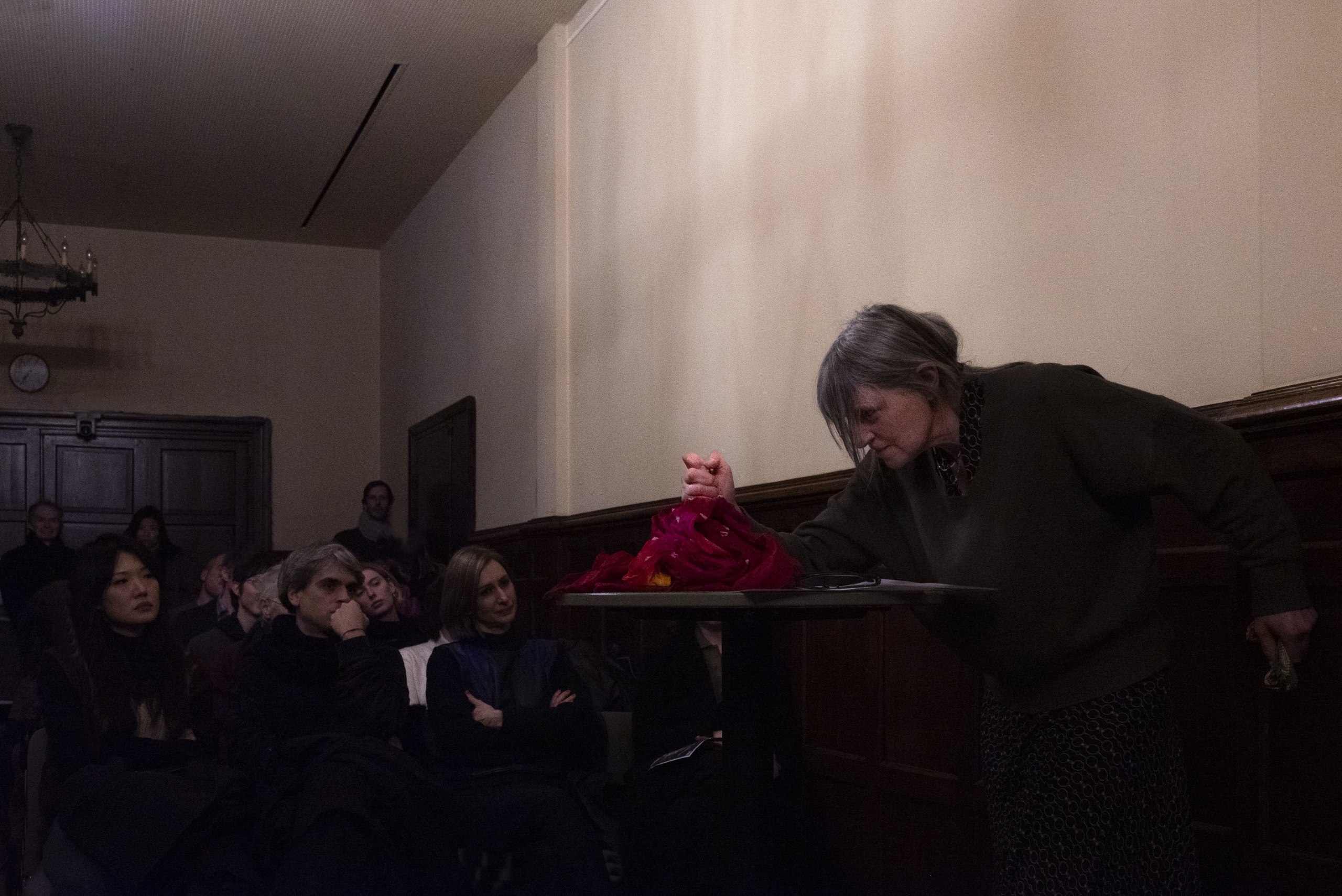

The Dispute of a Man with his Soul
I opened my mouth to my soul to refute myself. This is much I said. This is much much against me
To be arguing with my own soul who was once my servant and standing behind me suddenly vanished
God knows how I knotted myself how I netted my mouth with my teeth but something slipped out
…………………………….
It is my self – it is my soul itself on fire setting light to the house and the heat is cracking my head
Who should be here at my shoulder, like a praise singer yes my soul, you should be wafting me forth
Singing into my ear what a glamour I am even as I fall like a dead branch onto the earth…
Why won’t you hold up this heaviness? You neither lift me up nor let me die you just shuffle offended away
Well I will go down alone: the dog-headed god can sniff out who I am and the moon will measure my shadow
May the sun stop rowing and touch my face as he passes and we will see we will see spectacularly through me who I am
………..
I heard my soul say ptah! are you a man are you alive? You speak like your own gravestone accosting a passerby
Praise will not help this shivering body with no backbone, any thief could pick your life from your pocket
You have dropped your heart like a plummet into the grave but your reputation sir your name still flaps about the city
…………………..
Oh if only my soul my stubborn servant would not just sing but listen it would all be so smooth for us
She could have a pyramid and live alone in the beautiful drafty dark and the other souls would be burning
And I would serve my soul freshwater and heap up hay which would torture the other souls with hunger
But if I die here divided when I am not myself and haven’t yet thought about the funeral, well soul you will regret that
………
Then I spoke as my soul to my self to refute myself I said if you are so obsessed I said with this lavish funeral
Be assured it will be a sad day when the priest and the surgeons come and lift you from your hut on the hill
And once they have set you down in your hollow in the sand you will not be jumping up again to peep at the sun
Even those who have paid for granite who lie in triangular tombs – after a few days their offering stones are empty
And they might as well lie rotting on the riverbank where only the fish come to visit and sometimes the sun
Listen you must listen to your soul! It is good to lift up your head and hear cheerfulness – otherwise
You will be like that man who tends his allotment, fills up his sacks, tows his raft downriver to pay his taxes
When a black cloud blows over him he bends, lashed to his load wrestling all night with the ghost of the rain
Meanwhile his family screams in the same storm stranded by floodwater and the crocodiles like implacable tanks move in
I’ve seen that man weeping by the road he says he misses his wife and his head hurts like a broken egg
But he can’t wipe up his word for his dead children they something something saw the face of something
Or like that man who asks his wife for some bread and she says listen it’s almost supper – away he stomps insulted
At last he slinks back in locked in his mood without a word he sits aloofly down and chews his food like a stranger
………..
This was too much for me I said to my self my name stinks I said because of you it stinks of birdshit
My name stinks because of you like a heap of catfish on a fishing day when the sky is hot
My name stinks because of you worse than ducks in the mud, reeds full of waterfowl my name stinks
Worse than fishermen in damp clothes worse than wherever they have trailed through the creeks of marshes
My name stinks worse than the lurking of crocodiles worse than wherever a crocodile slides down sand
Worse than a wife smells who tells lies about a man worse than the beautiful children of her adulterer
My name stinks like a coven of anarchists who meet in dark rooms when the king is distracted
………..
…
Who can I trust today? Brothers have gone over to the left hand, friends have no compassion who can I trust?
Hearts are needy, everyone smiles and steals from his neighbour, kindness has gone everyone curses everyone
Who can I trust today? People make terms with murder they stamp their boots on whatever is good
Who can I turn to? The worldly man who bludgeons the weak, there he stands making everyone laugh
Who can I trust? Who can I trust? Robberies happen in plain sight and to thrive is to thieve – can you hear me?
My closest friend is a criminal my enemy is my accomplice if I helped a man yesterday he will not help me today
Who can I turn to? My family is compromised I must turn to strangers to find truth who can I trust?
Faces are blank people stare at the ground who can I trust even a true heart takes something and turns false
Who can I trust today? Noone is principled the lovely fields have been ravaged by gangsters can you hear me?
Close friends ignore me I go and explain myself to the drunk man on the road the one I walked with is no more
The days weigh me down there is noone to help me who can I trust there is endless endless dark over everything
………..
But I saw death today like the cure of a sick man like walking outside into the daylight after a long illness
I saw suicide today like the sacred sweetness of myrrh like sitting in a boat when the wind catches the sail
I could smell my own death like an overpowering flower like falling over the thin line in a stupor of drunkenness
I saw death today like a footpath washed by rain like a man coming home after a long journey
Like the blue sky suddenly showing through and a man looks up and sees for himself what he never saw
Death came up to me today like a man let out of prison at last thinking of his own street and his house after many years
………….
Surely Death is where a man is alive and has shed his horrors and has paid the necessary fee to make the crossing
Surely Death is where a man comes to know everything and will not be turned away from his meeting with the sun
……
Then I heard my self answer myself: hang up this coat of pain on its wooden peg oh my closest of companions
It is time to burn incense and pray for patience – only the slow-motion punctual years will wheel you to that light
Please acknowledge your soul as the voice I am not the ghost I will be – then on the right day, I will sing you alive to your burial
Let me fly a little, I will land when you are wholly tired and we will walk to that remembered house together
…….
So this argument was copied down by me from start to finish and keeps going forever now in writing