
A Revolving Door
Why in particular did you choose honey for your project, is it because it encompasses so many areas?
In this project I wanted to talk about the way we interact in society throughout history, and look at what we can learn from the past. I also wanted to explore the themes of nature and sustainability so important to us all, and honey seemed like a perfect medium through which to convey these ideas. Honey also seemed like a good means of exploring a lot of things I am already interested in, including honey itself, which I have had a passion for since I was a child. Then it was just eating honey, but now as well as eating it, the honey has become a symbol for me of love for my family, learning to express myself better through language, and exploring places as I travel around the world for my work through meeting beekeepers and people who are interested in pollination and other themes to do with building a more constructive and balanced future.
I did a show a long time ago in response to the treasure of Tutankhamun when it came to London. The ancient Egyptians kept bees and used honey and wax for rituals and feasts. The bee was considered sacred and was chosen as the symbol of the Pharaoh himself. I wanted to use honey and wax, amber and gold and encompass all the areas of my thought via this one conduit, as I thought it would be an interesting challenge for me intellectually and artistically.
What have you most enjoyed in your honey and bee project?
I have most enjoyed the way the honey feels inside my head as I go about my existence. I feel that this is a good project and the support I am getting here at the Institute for Ideas and Imagination has made me feel different about myself and my artistic practice and enjoy myself more than I ever knew was possible. I have liked interviewing people about social cohesion and dialogue between groups. I loved going to Bolivia to collect information about Prometa’s crazily ambitious pollination and beekeeping project there. I travelled for 12 days across the country from north to south with conservationists, a biologist, visionary restaurateurs, community leaders and activists looking at what can be done to promote stronger ties between different groups in society, not just within Bolivia but across the world. I loved the idealism and the pursuit of excellence I encountered there, and it made me feel like anything can happen. I want to invite viewers of my exhibitions to consider that they too are individual agents for change in however small or large a way, and I try to do this by creating conversation and beautiful art works made of honey in varying forms.
Of what you have learnt, what has been most important/valuable to you?
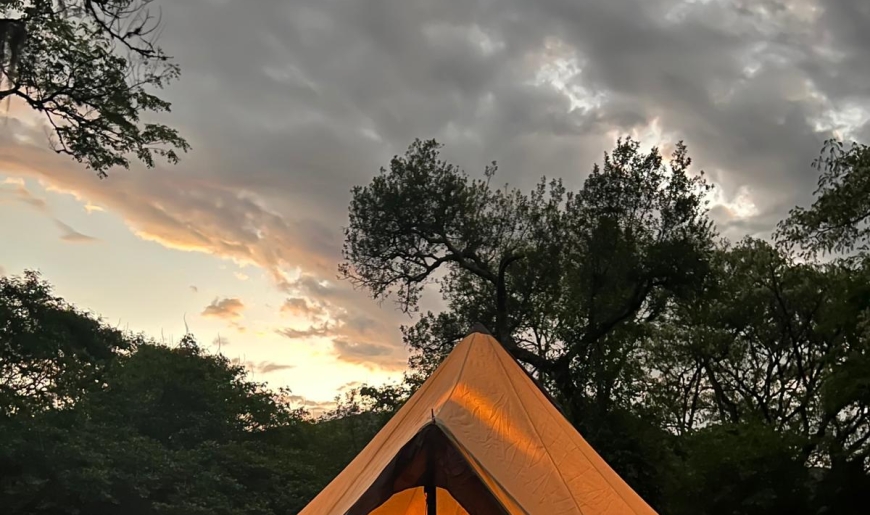
When I went to the Alarachi Cloud Forest in Bolivia, a gigantic virgin forest with 400,000 hectares of wild orchids, jaguars, waterfalls, bears and beehives, I slept out in the wild jungle with our team. I learned a lot about myself on this trip as I am extremely allergic to insect bites and was actually quite afraid. I was however bent on getting out to the beehives that had been built half way up this mountain and was even prepared to sleep in the Cloud Forest in order to achieve my goal. I realised that I could overcome my fear with good equipment and a trip to the handsome doctor in Paris who prescribed a large paper bag of medications none of which I had to take. I smothered myself in an oily insect repellent that made the dogs who came near me sneeze but I was fine. So I learned that I can do almost anything I like if I put my mind to it and I feel happy that this lesson will surely open new doors to me as a person and also through my work.
What have been the biggest challenges for you in doing the project, both personally and practically?
I also used to have a fear of travelling, and so this was a challenge. Going to the Cloud Forest, travelling for days across landscapes full of spiders and snakes along roads called things like the Camino de la Muerte, being stopped by a hailstorm with hail the size of satsumas in a city that was being held hostage by the ex president was fine, we broke down miles from anywhere etc. The part of the trip that challenged me the most was one night when I got a sort of fever from being so far from anyone I know and love, out in the Salar de Uyuni, on top of this salt-lidded dried out ocean which is an expanse of white so huge you can drive for four days in a car without seeing any landmark but white and the blue sky, and I was sleeping in a building made of salt, under a dome of salt bricks that looked a bit like bacon somehow, in a bed with sheets tucked in so tightly that I could not really move, like a pen in a pen holder, and I got this real sensation of terror. I talked myself out of it but it was quite a thing, and had nothing to do with honey.
Has the response been the same for different age groups and cultures? If not, how have they differed?
In Bolivia I was surprised that old people did not have myths and fairytales to tell me about honey and the symbolism of bees. Several people told me that honey bees did not come at all to Bolivia until the invasion of the Spanish in the 15th century. They did not see any spiritual significance in honey like some divine substance sent by the gods, but rather as a delicious treat for the family, and also for bears who they did not like as children as at the time there were bears everywhere and parents worried about their children being eaten by bears if they ventured out too far into the forest. When someone in the woods found a beehive full of honey they would organise a family picnic with a bonfire nearby, smoke out the bees with that fire, and then just pillage the beehive, destroying the whole thing and eating the honey right there and then. It is only in the last two or three decades that beekeeping has become an occupation in Bolivia. My favourite beekeeper Felipe told me when I asked him why he had decided to devote his life to bees that it seemed less hard work than taking care of the cattle, which was his other job option.
In Bolivia people liked me but did not see the possible power of an art exhibition inviting people to think deeply about their relationship with the environment and committing to change.
In France and Madrid, even in New York, I notice that there is interest in this project of mine, largely I think because of the honey, which appeals to people’s imagination. I like to bring in the studies and work of scientists, other artists, sound engineers, academics and biologists into my work, and even an AI theorist and queer studies academic invited me to give a conference about my ideas because she saw a parallel between bees gathering pollen and AI searchbots hunting for information. So I have been very encouraged and heartened by the interest and support of a lot of people for this project. At the Yorkshire Sculpture Park they say you should be able to convey your ideas as an artist to any 7 year old and this is a successful art project. The art work itself is the root and expression of the ideas and making the most innovative, beautiful and profound work not just as the work stands alone but as a group is my challenge.
What do you consider a successful project? What boxes do you think a good project needs to tick?
All my life as an artist is devoted to the reflection and communication of ideas about what it means to be a human being. I like to be a sort of conduit between one school of ideas and another, and this involves my doing a great deal of learning and research, which is another thing I like. So one element of a successful project for me would be for me to have passed on questions and invitations to think about a given topic or many given topics from some community and climate activists in South America to other like minded people in another part of the world. My friend Marie calls this me “herding” people. I also like to encourage individuals to feel better about themselves and consider the possibility of the sublime in the ordinary and even in the infra ordinary. I love being a human being, although it has its challenges and the people I have met through my work, in particular those I met through the artwork I made a few years ago “Am I My Brother’s Keeper?” have made me into a different person. I would like to think that by the time I die I will have underlined to quite a lot of people that they are neither more nor less important than they think, and that it is worth engaging with the world around us in a positive way.
When do you think your concentration and effort ends on a project and you decide to move on to the next project?
Mostly that is a question of time. I am always thinking about things I have learned through projects like about a heart surgery that I witnessed at Hammersmith Hospital for the Egyptian show. I find myself looking at people wondering what their heart looks like not figuratively but literally, and I am dazzled by the beauty and simplicity of the human body. I did not however pursue an interest in medicine in my work. Perhaps I will! Time as an artist is something that is swallowed up a lot with admin and everyday life. The poet John Ashbury called his autobiography The Other 23 Hours which I thought was good. Right now I am working on several projects, and each of which contains a myriad of smaller projects and individual artworks to be made, some of them very complex. Once they are done I am generally already working on a new piece and seldom feel any sense of satisfaction as I am always thinking I could have done the project better.
What is next?? Do you have another project in mind and do you think this project may change how you might approach it?
This project is far from finished as we are still in discussion with the museum where it is likely to happen and we will be able to talk about it soon. Then we hope to have the exhibition travel. I have so many things happening in the future but as with all the work I do I am getting a lot of ideas for new projects as I do this one. My phone is full of notes and my bags and notebooks stuffed with notes and drawings. I think of so many things at the same time it is often not that good. I am looking at a gigantic project in the mountains in Europe if all goes well, and I am also writing poetry and an essay about water as a medium. I have a lot of overdue commissions both public and private and I will be very sorry to leave here in June but glad to get on with the rest of my life inspired by my time here.
I always want to have doors open to walk through but in this case I hope very much to come back to this Institute somehow so perhaps I would like to have this door as a revolving door. At the very least I know I have made firm friends for life here, and that is invaluable and totally appreciated. I am so grateful for my time here.