

Landscape, Belonging, and Time
Proof of registration, via a QR code on your phone or on paper, will be required to enter Reid Hall. Entry will be refused to those who are not registered.
Please note that access will not be permitted 15 minutes after the start of the event.
This event will be held in English.
To be notified of upcoming Institute for Ideas and Imagination events, we invite you to sign up for our monthly newsletter.
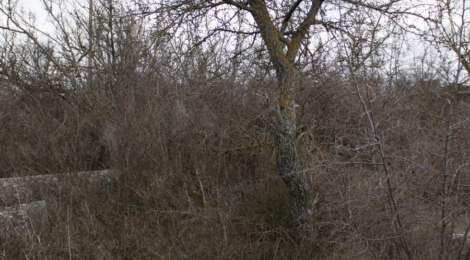
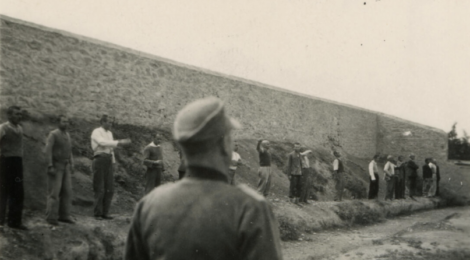
In conjunction with the Sciences Po-Columbia-sponsored conference Luttes d’hier et richesses de demain – Ecological Resources, Belonging and Temporal Imaginaries in Guinea, artists and scholars working across different traditions and locations will reflect on how their work engages with attachment to place. Land, ecology, and historical time produce social worlds and are produced by them. They enmesh in people’s claims to belonging and collective identity, particularly amidst extraction, environmental transformation, and political change. The event brings together artists and academics from both Guinea and the Columbia Institute for Ideas and Imagination to explore the potential for international comparison across different geographies.
Panelist:
Camila Rodríguez Triana is a visual artist and filmmaker whose distinctions include the Best Art Installation Award at Panorama 21, Le Fresnoy (France), and the Emerging Artist Award at the Rencontres Artistiques, Carré sur Seine (France). She was selected as Carrie Mae Weems’s mentee for the Rolex Mentor and Protégé Arts Initiative (2020–2022). Her work has been presented internationally at institutions and venues such as the National Museum of Contemporary Art (Greece), the Salon de Montrouge (France), and BAM Fisher, New York (USA), among others. Her films have been screened at major international festivals, including the Karlovy Vary International Film Festival, Doclisboa, and FIDMarseille. Camila Rodríguez Triana is a 2026-2027 Fellow at the Institute.
Timothy Vasko is Assistant Professor of Religion and Human Rights at Barnard College. An historian of international political thought, his work focuses on the intersections between religion, law, and empire in the early modern Americas. He has published essays in History of the Human Sciences, Critical Research on Religion, and Modern Intellectual History. His first book, Making All the World America: Native Information and the Doctrine of Discovery, is published by University of Pennsylvania Press. Timothy Vasko is a 2026-2027 Fellow at the Institute.
Born in Guinea, Hakim Bah is a playwright, director, and actor. His work has received numerous awards. His plays have been published by Quartett, Lansman, Théâtre Ouvert, and Passages among others.
Nomi Dave is Associate Professor of Music at the University of Oxford and the author of The Revolution’s Echoes: Music, Politics, and Protest in Guinea (Chicago: 2019). Before entering academia, she worked in Guinea for the UN refugee agency from 2002 to 2005.
Moussa Yéro Bah is a Guinean journalist and President of the Guinean NGO Femmes, Développement et Droits Humains en Guinée (F2DHG). A political commentator and specialist in gender issues, she is also a poet and the author of the forthcoming collection Dans les abysses de la féminité.Since 2013, her organization has supported more than 1,000 survivors of gender-based violence.
Bremen Donovan is a filmmaker, photographer, and researcher working primarily in West Africa, France, and the United States. A 2025 Fejos Fellow, her previous work explored policing and the production of visual evidence in France. She is currently directing her first feature documentary film, a collaboration with three generations of journalists in the Republic of Guinea, part of a broader project that encompasses an extensive digital archive and artistic photography book.
Organisers:
Lynnette Widder is Professor of Practice at Columbia University and co-author of Seeds of Diaspora (2026). From 2019 to 2023, she led research on remote sensing for bauxite mining impacts in Guinea that was co-funded by the UN Development Program. Her recent research and writing has appeared in New German Critique, Oxonian Review, Urban Omnibus, Dimensions and Materia.
Gustav Kalm is Assistant Professor at Sciences Po Law School where he holds the Junior Chair for Earth Jurisprudence. Trained as an anthropologist and lawyer, he studies the legal conditioning of international resource inequalities with focuses on West Africa and Europe.
This event is organized by Lynnette Widder, who was a 2020-2021 Fellow at the Institute.