

Announcing Our 2026-27 Class of Fellows
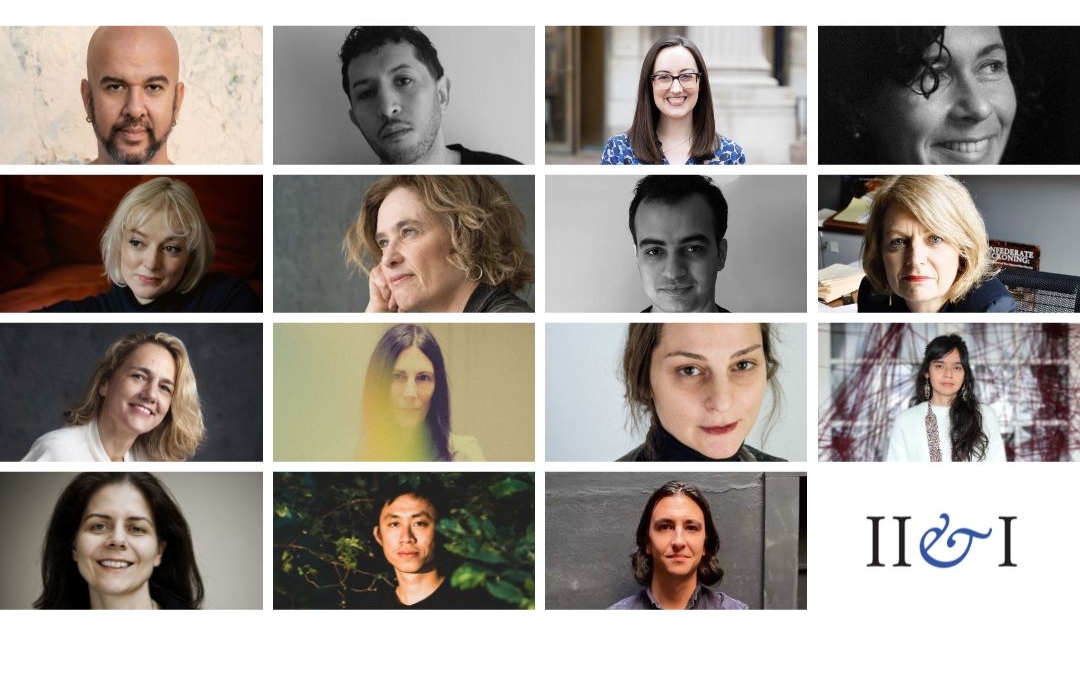
Bringing together innovative scholars with some of the world’s most exciting young film-makers and photographers, writers and poets, visual artists and composers, the Institute for Ideas and Imagination is proud to announce the 2026-27 Fellowship cohort which will be joining us in Paris in September 2026. Working on a range of topics from environmental crisis seen through the fading senses of touch and sound to the American civil war and the jurisprudence of authoritarianism, from the ambiguities of so-called peacekeeping in the borderlands of the old Soviet Union to empire and exile in southeastern Asia, Institute Fellows will present their work throughout the year in the SNF Rendez-Vous lecture series. These talks are open to the public and we look forward to welcoming you in the course of what promises to be an exciting year ahead.
The Columbia Institute for Ideas and Imagination is made possible by the generous support of the Stavros Niarchos Foundation (SNF), the Areté Foundation, the Andrew W. Mellon Foundation, and Daniel Cohen, with additional gifts from the EHA Foundation, Pierre-Alexis Dumas and Sophie Bouilhet-Dumas, the Getty, the Czernecki Educational Foundation, Judith Ginsberg and Paul LeClerc; Tom and Maarit Glocer, James Leitner and Tracy Higgins, Gerald Rosberg, Olga and George Votis; Lee C. and Jean Magnano Bollinger, Fondation Louis Roederer, and Mel and Lois Tukman.
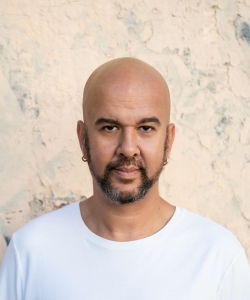
Born in Rio de Janeiro, American-Brazilian composer Marcos Balter has created a body of work that moves fluidly across transdisciplinary and polystylistic realms. Praised by The New York Times as “spellbinding,” his music has received major honors from the American Academy of Arts and Letters, the John Simon Guggenheim Memorial Foundation, the Library of Congress, the Civitella Ranieri Foundation, the Fromm Foundation at Harvard University, Chamber Music America, and the Leonard Bernstein Foundation. With an extensive discography to his name, he serves as the Fritz Reiner Professor of Musical Composition at Columbia University and Co-Director of the Composition Program at the Tanglewood Music Center.
At the Institute, Balter will develop Ogun, a work for percussionists, community participants, and live electronics rooted in Yorùbá cosmology and shaped by the deity of the same name as its structural and conceptual force. While its framework remains constant, each realization will evolve through site-responsive adaptations, locally sourced instruments, and collaborative exchange. In addition to composing the score, Balter will explore the creation of digital exoskeletons for acoustic instruments and conduct archival research to deepen the work’s technological, historical, and ethnographic dimensions.
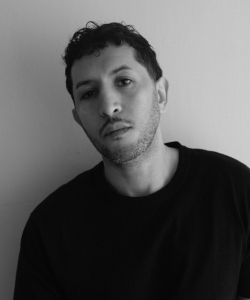
Born in Leicester to Moroccan parents, Fyzal Boulifa is a self-taught writer-director living and working between London and Morocco. His films incorporate non-professional actors to explore the mutability of identity in a working-class context. He has made two feature films, Lynn + Lucy (2020), BIFA-nominated, and The Damned Don’t Cry (2023), recipient of the New Voices, New Visions Award at the Palm Springs International Film Festival. His short films include Rate Me (2015) and BAFTA-nominated The Curse (2012), both awarded the Illy Prize for Best Short Film at the Director’s Fortnight at Cannes. He also works as a screenwriter, recently co-writing Mahdi Fleifel’s To A Land Unknown (2024).
During the Fellowship, Boulifa will be working on Eternal Peace, an era-spanning melodrama set between Morocco and England, recounting the dissolution of a family and a marriage in reverse chronology in order to interrogate the immigrant’s relationship to time, sacrifice and capitalism.
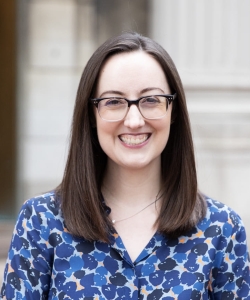
Julia Doe is Associate Professor of Historical Musicology at Columbia University, specializing in the music, literature, and politics of eighteenth-century France. She is the author of The Comedians of the King (University of Chicago Press, 2021), as well as articles in the Journal of Musicology, Cambridge Opera Journal, and Eighteenth-Century Music, among other publications. Doe is the recipient of the H. Colin Slim, Alfred Einstein, and M. Elizabeth C. Bartlet awards from the American Musicological Society, as well as grants from the National Endowment for the Humanities and the Fulbright Program.
At the Institute, Doe will be writing Microhistories of Empire: Music and Slavery in Saint-George’s Paris which investigates the transatlantic circulation of performers, patrons, and repertoires in the eighteenth and early nineteenth centuries. Drawing on extensive work in both legal and musical archives, the book is structured as a series of case studies radiating outward from the virtuoso violinist, Joseph Bologne, Chevalier de Saint-Georges. The project sheds new light on the mechanisms of cultural transfer between European powers and their colonial holdings, while recentering the musical labor of African and African-descended people in ancien-régime and revolutionary France.
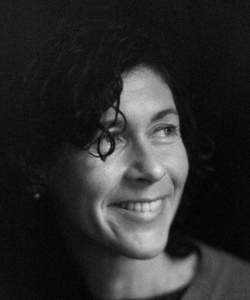
Sasha Dugdale is a writer and translator. She has published six books of poetry with Carcanet, most recently: Deformations (2020), which was shortlisted for the T.S. Eliot and Derek Walcott Prizes. She has written for The Guardian and the Times Literary Supplement and edited Modern Poetry in Translation. She has enjoyed a long collaboration with the writer Maria Stepanova as a translator and has won a number of PEN Translates Awards as well as being shortlisted for the International Booker Prize. Her translation of Stepanova’s In Memory of Memory won the MLA Lois Roth Award. Dugdale is a Fellow of the Royal Society of Literature.
At the Institute, Dugdale will focus on A Work of Salvage, an experimental piece of poetic prose, which attempts to salvage a lost culture and society by means of magic, dreams, and the reworking of classical literature, and in doing so will create a possible way into an imaginary future.
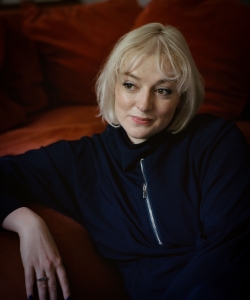
Ella Frears is a poet and artist originally from Cornwall, now based in London. She’s the author of Shine, Darling, shortlisted for the Forward Prize and the T. S. Eliot Prize, and Goodlord, a hybrid work which takes the form of one long email to an estate agent, also shortlisted for the Forward Prize. She was a Royal Literary Fund Fellow at The Courtauld, and a Poetry Fellow at the University of East Anglia. Frears’ poems have been translated into Italian, Portuguese, Russian, Greek, Turkish, Slovak, and Cornish. She hosts Tears for Frears, a chat and music show on Soho Radio.
At the Institute, Frears will work on SPENT, a new collection of unilateral poems that complicate ideas of character, class, and time. These poems will take the form of one-sided conversations with voices that are worn out, weary, exhausted, used up, or expired. Frears seeks to interrogate and expand the persona poem, testing its limits through performance, text, and audio recordings, and to question the role of the poet in a world that seems to be hurtling on fire into the extremities of the century.
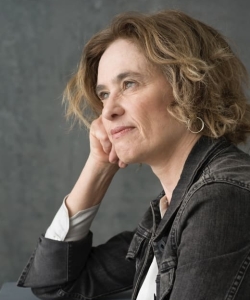
Gil Z. Hochberg is a writer and scholar whose work bridges the political and the artistic. Trained in comparative literature at the University of California, Berkeley, she is now the Ransford Professor of Comparative Literature and Middle East Studies at Columbia University in New York. She is the author of four books, several art catalogs, and numerous essays and is widely recognized as a leading scholar of Palestine and Zionism, and as a public intellectual. Her latest book, My Father, The Messiah, a memoir of her father, was just published by Duke University Press in 2026.
At the Institute, Z. Hochberg will be researching Christian Zionism: The Long Making of a World Order. Although the great majority of Zionists across the globe today, as in the past, are Christians, most scholarly and popular accounts of the phenomenon continue to associate it exclusively with Judaism. This book project argues that we cannot begin to understand Zionism without first acknowledging it as a global Christian project that, by the 21st century, had spread across Latin America, the African continent, East Asia, Europe, and the United States.
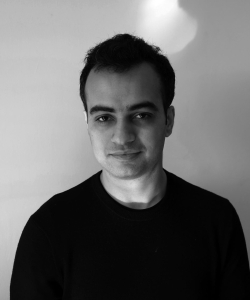
Madhav Khosla is the B.R. Ambedkar Professor of Indian Constitutional Law and Professor of Political Science at Columbia University. He works across a range of questions in modern constitutionalism from a theoretical and comparative perspective. His many publications include India’s Founding Moment: The Constitution of a Most Surprising Democracy, a study of the political thought of India’s constitutional founding.
At the Institute, Khosla will be writing a book entitled Courting Authoritarianism. Authoritarian regimes are often thought to be lawless, or to the extent that they use law, to use it in strategic or instrumental ways. This project considers the role that law plays in authoritarian societies in creating legal duties and obligations, and how authoritarian law has its own inner logic and normativity. As such, it helps us consider the ways in which such regimes generate and sustain legitimacy.
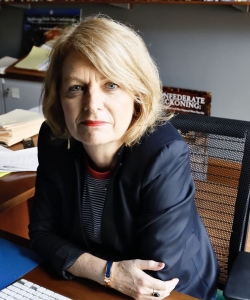
Stephanie McCurry is the R. Gordon Hoxie Professor of American History at Columbia University. She is the author of three books including Confederate Reckoning: Power and Politics in the Civil War South (a finalist for the Pulitzer Prize), and Women’s War: Fighting and Surviving the American Civil War. Her writing has appeared in the Atlantic, the Nation, the TLS, The New York Times among others. She was the recipient of a Guggenheim fellowship and another at the Cullman Center for Writers and Scholars at the New York Public Library. She was born in Belfast, Northern Ireland, has two children, and lives in New York City.
McCurry is currently working on a new history of the post-Civil War and post-emancipation United States (1865-1918) that explores the implications of reconstruction for private as well as public life. Her approach will combine elements of microhistory focused on individual human experience with the attentiveness to structural change required for a sweeping history of the era.
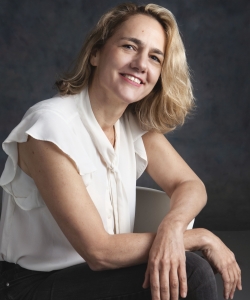
Christina Nakou is a visual artist specialising in mosaics. Her work focuses on notions of time and physicality, and creates spaces of interrelation between solid matter, water, and light, inviting the audience to engage with her installations through diverse senses. She was a Visiting Artist in the American Academy in Rome and her work has been presented at the 18th Venice Architecture Biennale, at the Archaeological Museum of Thessaloniki, the Gardens of the Embassy of Italy, and the Archaeological Site of Ancient Messini, in Greece, among others. She has collaborated with museums and institutions, highlighting creativity through handmade processes.
At the Institute, Nakou will be focusing on the creation of mosaics in the post-human era. The sense of touch allows us to connect with our environment, but as we move into the post-human era, tactile sensitivity atrophies, as the handmade objects that surround us are gradually withdrawn. What implications will this have on the formation of our ethics, on our contact with ourselves and with other people, on the sustainability of our natural environment? Nakou will be designing an experimental mosaic installation, exploring these ideas while focusing on tactility and on the experience of time.
Verena Paravel is a French filmmaker, artist, and anthropologist, who blends cinematic experimentation with ethnographic, ecological, and philosophical inquiry. Her films have been shown at international festivals including Cannes, Venice, Berlin, Locarno, Toronto, and the New York Film Festival. Works such as Foreign Parts (2010, with J.P. Sniadecki), Leviathan (2012), Caniba (2017), Somniloquies (2018), and De Humani Corporis Fabrica (2022, with Lucien Castaing-Taylor) have received widespread critical acclaim and have been honored with numerous international awards.
At the Institute, Paravel will research COSMOFONIA, a project that investigates how cinema can reconfigure human perception by shifting focus from the visual to the acoustic. Working with scientists and using advanced recording technologies, she explores forms of audible life and vibration that exceed the limits of the human ear, translating them into an immersive cinematic experience. The project examines listening as both a methodological tool and a political act, revealing ecological interdependence and the pervasive presence of human noise within fragile environments.
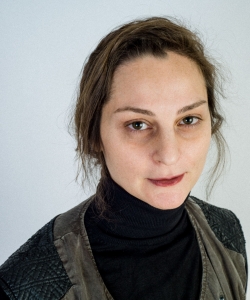
Tako Robakidze is a documentary photographer based in Tbilisi, Georgia. She holds degrees in law from Tbilisi State University and journalism from Caucasus University, and studied documentary photography at the Sepia School. Since 2014, she has worked as a freelance photographer in Georgia, with a particular focus on war, displacement, and the Russian occupation. Robakidze is a National Geographic Explorer and the recipient of several international fellowships and awards, including the Magnum Foundation Photography and Social Justice Fellowship, the Stanley Greene Legacy Prize, the VII Academy Fellowship, and the Alexia Award of Excellence.
In her project Peacekeepers, Robakidze documents the complex and evolving consequences of Russian occupation in Georgia. It unites the human stories of people living near shifting borders and internally displaced persons (IDPs), while examining the cultural, political, and psychological dimensions of life under occupation. Drawing on twelve years of work along the fractured edges of her country, her project confronts what is visible—arrests, fences, erased schools—with what remains invisible: the slow suffocation of culture and the psychological weight of propaganda. The title inverts the imperial euphemism, whereby invasions are framed as “peacekeeping,” and reclaims the word for what people live for, and defend through their resistance. Robakidze will develop the project into a multi-sensory installation together with an experimental book.
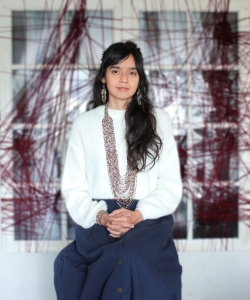
Camila Rodríguez Triana is a visual artist and filmmaker whose distinctions include the Best Art Installation Award at Panorama 21, Le Fresnoy (France), and the Emerging Artist Award at the Rencontres Artistiques, Carré sur Seine (France). She was selected as Carrie Mae Weems’s mentee for the Rolex Mentor and Protégé Arts Initiative (2020–2022). Her work has been presented internationally at institutions and venues such as the National Museum of Contemporary Art (Greece), the Salon de Montrouge (France), and BAM Fisher, New York (USA), among others. Her films have been screened at major international festivals, including the Karlovy Vary International Film Festival, Doclisboa, and FIDMarseille.
At the Institute, Triana will be developing Reparando la palabra, an artist’s book that employs the language of weaving and embroidery as a reparative counterpoint to alphabetic and spoken forms of writing that have historically produced discourses of subjugation toward the feminine. The book narrates the journey of a mestiza woman—stitched together from fragments and enforced silences—who seeks to reclaim her identity beyond the frameworks imposed by structures of power.
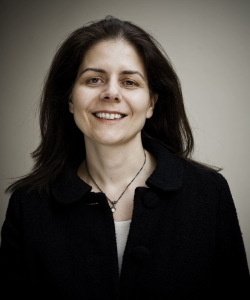
Emmanuelle Saada teaches French at Columbia University. Her main field of research is the history of French imperialism in the 19th and 20th centuries, with a specific interest in law. Her first book Empire’s Children: Race, Filiation and Citizenship in the French Colonies was published by the University of Chicago Press in 2012 and her second book, Histoires et colonisations des récits de la conquête aux héritages post-coloniaux was published by Gallimard in 2026.
Saada’s book project, The Rule of Law and Violence in the Making of Colonial Algeria (1844-1902), examines the articulation of law and violence in the French colonization of Algeria between 1844 and 1902. It focuses on the Code de l’indigénat, a disciplinary legal regime imposed on Algerians. The project explores the multiple debates about the juridical nature of the Code, among local colonial administrators, legal theorists and legislators and finally as expressed in the actions of ordinary Algerians, who wrote innumerable petitions and mounted legal challenges to the Code.
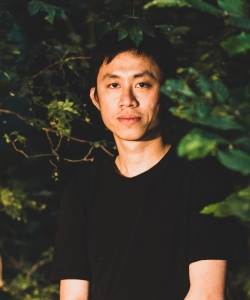
Born in Buôn Ma Thuột, a city in Vietnam’s central highlands, Trương Minh Quý often sets and finds inspiration for his films in his hometown. His filmography includes The City of Mirrors: A Fictional Biography (2016), The Tree House (2019). In 2024, his film Việt and Nam was selected in Un Certain Regard at the Cannes Film Festival. In 2025, his film, Hair, Paper, Water,…, co-directed with Nicolas Graux, won the Golden Leopard (Filmmakers of the Present) at the Locarno Film Festival.
At the Institute, Quý will research his next feature film, which explores the intricate nature of power, nostalgia, and history within a dispossessed, aristocratic Vietnamese family living in exile in the interwar years of the 20th century. This film continues his cinematic obsession with the question of home and homelessness. Making this film is an attempt to alleviate the burden of time in order to bring back the dead: dead people, dead places; or perhaps only to chase the illusion of doing so.
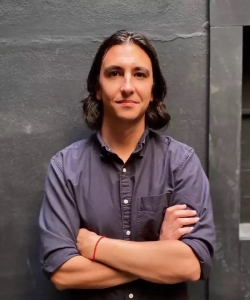
Timothy Vasko is Assistant Professor of Religion and Human Rights at Barnard College. An historian of international political thought, his work focuses on the intersections between religion, law, and empire in the early modern Americas. He has published essays in History of the Human Sciences, Critical Research on Religion, and Modern Intellectual History. His first book, Making All the World America: Native Information and the Doctrine of Discovery, is published by University of Pennsylvania Press.
Vasko plans to undertake two closely related research projects at the Institute. He will complete a book manuscript entitled The Indigenous: A Genealogy of the Idea. He will also conduct research and writing for his next project, Voices of Reason: Other Enlightenments in the Western Hemisphere. His intellectual interests focus on the legacy of the Enlightenment in the global North, and the implications for the current crisis of morality and legitimacy in modern international politics, particularly surrounding the rights of Indigenous and other non-state peoples.