
KEMBARA: Adventures in the Artistic Landscape of Southeast Asia

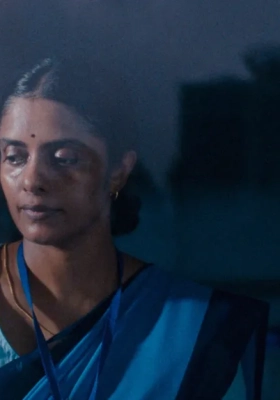
One evening early on in the year, I found myself chatting with Columbia professor Carol Gluck, who was screening a couple of Japanese films and was teaching a class in the Masters in History and Literature program at Reid Hall. We soon discovered that we shared a passion for Asian cinema – not just the work of internationally celebrated filmmakers like Kurosawa, Zhang Yimou, or Wong Kar-Wai, but that of contemporary masters from Southeast Asia, which remains a cultural blank to audiences outside the region. Wouldn’t it be great to have a regular film evening for Fellows and everyone else at Reid Hall, where we could show the work of Apichatpong Weerasethakul or Kirsten Tan, for example?
By the time we next got together to discuss which films to show, the conversation had already expanded to include other art forms in Southeast Asia. Why was it that Southeast Asian artists were so little known outside their region, despite the incredible range and depth of work being produced today, by people at the cutting edge of their fields? Wouldn’t it be great to put together a series of events that showcased not just the many exciting filmmakers from this vast, complex region, but writers, musicians, dancers, and visual artists too? And wouldn’t it be even better if they could show and speak about their work across disciplinary lines? In conversation with French counterparts, or people who straddled geographical and cultural boundaries?
Before long, we came up with the idea of KEMBARA, an ongoing series of events that aims to bring the most interesting selection of Southeast Asian artists to Reid Hall, to introduce their work to an international audience and unpack the fascinating layers of art, politics, and culture in contemporary Southeast Asia. KEMBARA is a Malay word for adventure or travel, often with no specific destination. Our events match Southeast Asian artists with those from France and further afield in unexpected and surprising combinations, situating artistic and political movements in Southeast Asia within a global context in a way we hope expands our understanding of the region, both for international audiences and the artists working there.
In just a few months, the Institute had commissioned a brand-new short film on memory and politics by the Thai filmmaker and novelist Prabda Yoon, which premiered at Reid Hall and went on to win numerous awards at festivals all over the world; and the Vietnamese-French playwright/director Caroline Nguyen spoke with Édouard Louis (2019-20 Fellow) before a standing-room only Grande Salle comprising a predominantly young, Asian-French audience, many of whom had never attended an event that featured writers. In the coming months, we have an all-female panel representing the best of young Malaysian and Singaporean Writers; film-maker Anthony Chen with his long-awaited second film; and the Indonesian performance artist Melati Suryodarmo.
As we continue to welcome artists and audiences who would not usually have the chance to meet each other, KEMBARA is proof that at the Institute, casual conversations over drinks in the Salon have the ability to morph into events that transcend boundaries and touch the lives of people far beyond Reid Hall.