

Law and Violence in Colonial Algeria, 1830–1900
Proof of registration, via a QR code on your phone or on paper, will be required to enter Reid Hall. Entry will be refused to those who are not registered.
Please note that access will not be permitted 15 minutes after the start of the event.
This event will be held in English.
To be notified of upcoming Institute for Ideas and Imagination events, we invite you to sign up for our monthly newsletter.
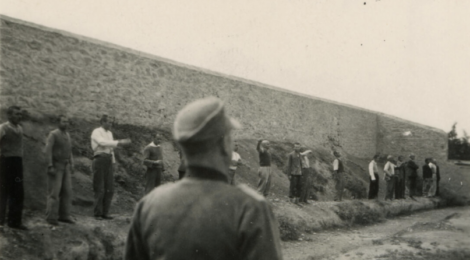
Following the conquest of Algiers in 1830, the French state waged a brutal war of colonial expansion. The “pacification” of Algeria was marked by repeated and often extremely violent insurrections, met with equally violent repression. At the same time, beginning in the 1830s, the French state invested heavily in constructing a colonial legal order. It devoted substantial resources to producing legal norms, establishing judicial and administrative institutions, and training the personnel required to administer them.
This lecture examines the simultaneous deployment of law and violence in nineteenth-century Algeria. By analyzing competing conceptions of legality articulated by legal theorists, colonial officials, and Algerians themselves, it argues that law and violence were not related through “contradiction” or “exception”. Rather, they were mutually constitutive: violence enabled the establishment of colonial legality, while law legitimized, organized, and sustained colonial violence.
Emmanuelle Saada teaches French at Columbia University. Her main field of research is the history of French imperialism in the 19th and 20th centuries, with a specific interest in law. Her first book Empire’s Children: Race, Filiation and Citizenship in the French Colonies was published by the University of Chicago Press in 2012 and her second book, Histoires et colonisations des récits de la conquête aux héritages post-coloniaux was published by Gallimard in 2026.
The Rendez-Vous de l’Institut Series is generously supported by the Stavros Niarchos Foundation.
This event will be recorded and may be broadcast as part of our SNF Rendez-vous de l’Institut podcast series. By participating and asking questions, you consent to the use of your voice in this context.